
The list of small cleanup jobs never ends.
One week, it’s breakfast left behind after a windstorm. Next, it’s a growing pile of trimmings from cutting back trees or clearing brush. Meanwhile, old boxes of paperwork and cardboard continue to collect in the garage, basement, or workshop.
Before long, you’ve got a few different piles that all need attention.
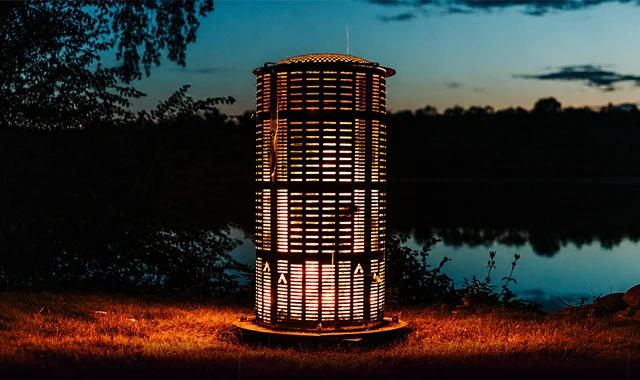
For many property owners, hauling everything away is always the easiest or preferred option. A backyard incinerator offers a contained way to burn yard debris and paper products while keeping the fire controlled.
That raises one important question…
What is an Incinerator?
An incinerator is a contained outdoor burning unit designed to reduce debris through controlled combustion.
Unlike big box fire pits or open metal drums, purpose-built incinerators are designed with airflow openings that help fires burn hotter and more completely while containing embers and ash
3 Use Cases for Backyard Burning at Home
While designs and sizes may vary, most backyard incinerators serve a few common purposes around the home and property. A few include:
1. Yard Waste Cleanup
Yard debris is one of the most common reasons homeowners invest in a backyard incinerator. After a storm passes through or seasonal trimming gets underway, it doesn’t take long for small branches, brush, and other green debris to start piling up.
In most cases, hauling that material away is costly and time-consuming, involving multiple trips back and forth. A backyard incinerator allows property owners to reduce certain types of yard waste directly on site, turning large piles of debris into a small pile of ash.
Think spring yard debris cleanup… an intimidating time of year for property owners. After a long winter, branches, brush, and trimming debris tend to pile up quickly. When burned correctly, dry yard debris can be quickly reduced in a controlled manner.
For best results, materials should always be dry before burning. Wet or green debris tends to produce more smoke and less efficient burns.
2. Secure Thermal Destruction of Documents
Backyard incinerators are also used for securely destroying sensitive paperwork. Old financial records, client files, tax documents, and other personal information must be destroyed in a manner that precludes reconstruction.
When burned properly, paper documents are reduced completely to ash.
This removes the need for costly shredding services and eliminates the hassle of storing bags of partially shredded paper while waiting for disposal.
For people dealing with large volumes of records, thermal destruction can be a practical alternative to traditional shredding.
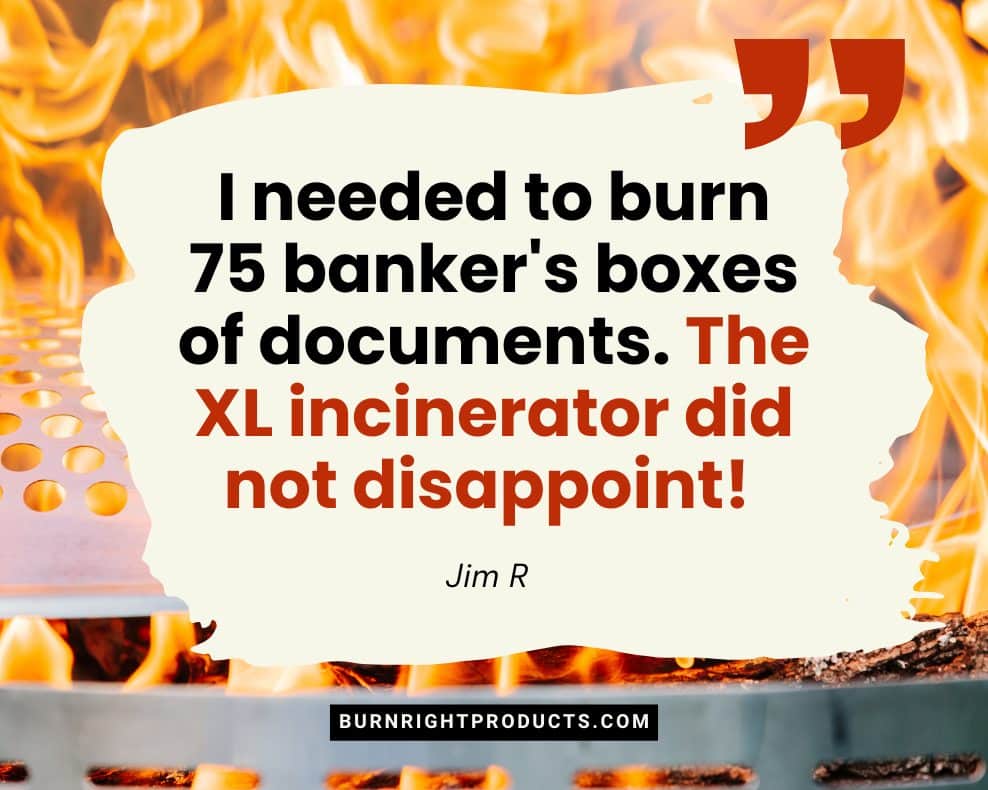
Our customer, Jim, is a great example. Jim took 75 banker boxes of old documents and reduced them to nothing over several days, instead of spending hours removing staples and feeding endless pages of paper through a shredder.
3. Outdoor Fire Feature and Social Use
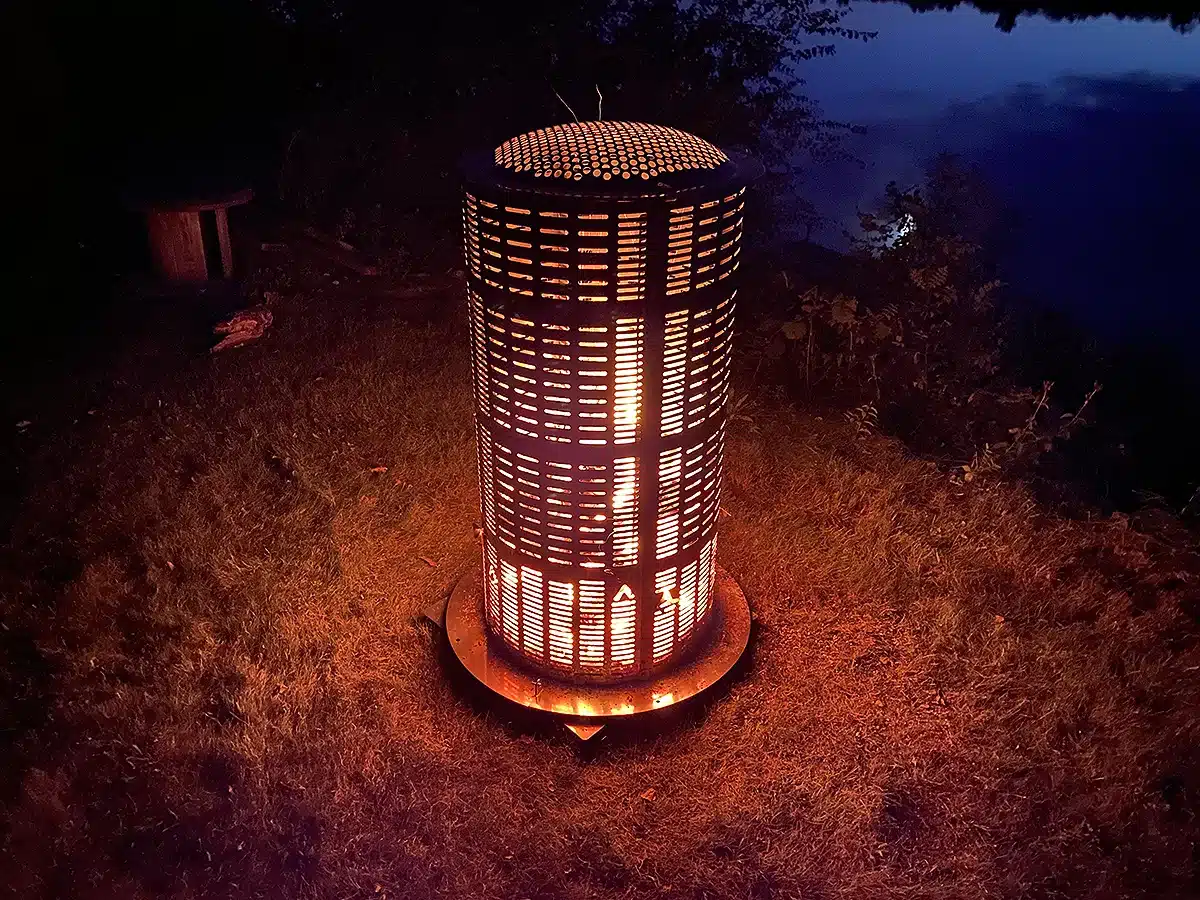
Backyard incinerators don’t have to be all business. They can also be enjoyed as a simple outdoor fire on a cool evening.
Unlike open burn piles or traditional fire pits, an incinerator’s structure helps contain the fire within the unit, keeping embers better controlled.
That contained design allows homeowners to enjoy the warmth and glow of a small fire while spending time outside.
Whether it’s relaxing after a long day, pulling up a few chairs with family, or chatting with neighbors as the fire burns down, the incinerator can double as a casual gathering point.

What You Can and Should Not Burn
Understanding what materials are appropriate to burn is an important part of responsible backyard incinerator use. Certain natural materials and paper products burn cleanly when dry, while others should never be placed in a burn barrel or incinerator.
Commonly Acceptable Materials
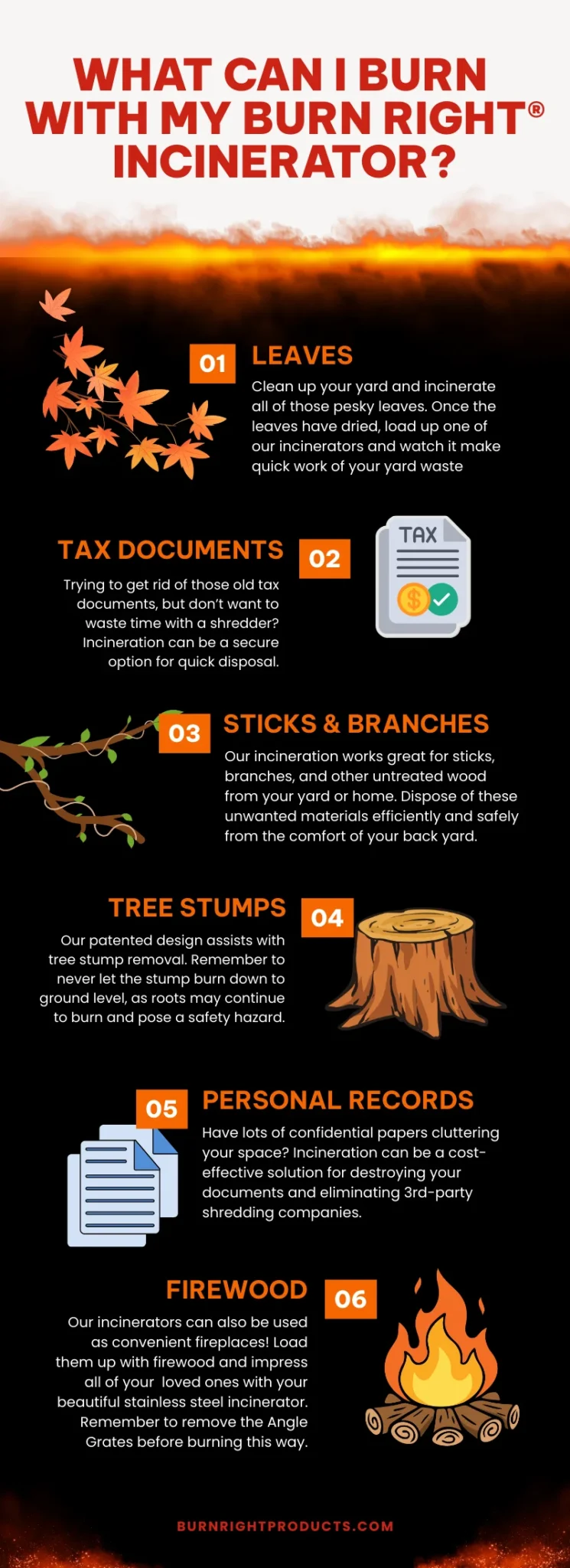
- Dry yard debris such as leaves, small branches, and brush
- Paper products, including old documents and cardboard
- Untreated wood and natural wood scraps
These materials tend to burn more completely when dry and properly arranged in the unit.
Materials to Avoid
- Synthetic or plastic materials
- Rubber products
- Certain painted or coated materials
- Pressure-treated lumber
- Batteries, aerosol cans, or other pressurized containers
These items can release harmful substances or create unsafe burning conditions and should never be placed in an incinerator.
Local regulations may also restrict certain types of backyard burning, so it’s always important to review local guidelines before starting a fire.
Basic Safety Guidelines
Backyard incinerators provide a more controlled way to burn certain materials, but safe operation is still important. A few simple precautions can help keep backyard burning responsible.
Before You Burn
Check local regulations to make sure backyard burning is allowed in your area.
Some communities restrict burning during certain times of the year or require permits. It’s also important to review the manufacturer’s guidance for your specific incinerator so the unit is assembled and operated correctly.
Setup
Place the incinerator on a stable, non-flammable surface, ensuring there is ample open space around it.
Maintain a safe distance from buildings, fences, and overhead branches to minimize the risk of fire spreading. A clear area around the unit also allows for proper air circulation and makes it easier to manage the fire safely.
During Use
Never leave an active fire unattended.
Wind conditions can change quickly, and keeping an eye on the burn helps prevent sparks or embers from spreading. Always burn only appropriate materials, and keep water or a fire extinguisher nearby in case the fire needs to be quickly controlled.
Burn Right’s Unique Design for Safe Burning
Not all burn barrels are built the same. Improvised metal drums and thin barrels often struggle with airflow, leading to smoky, inefficient burns.
Burn Right incinerators are designed with features that promote better airflow, higher burn temperatures, and improved containment.
Key design features include:
- Patented circular design: The round structure allows air to move evenly around the contents, improving burn efficiency compared to square burn cages.
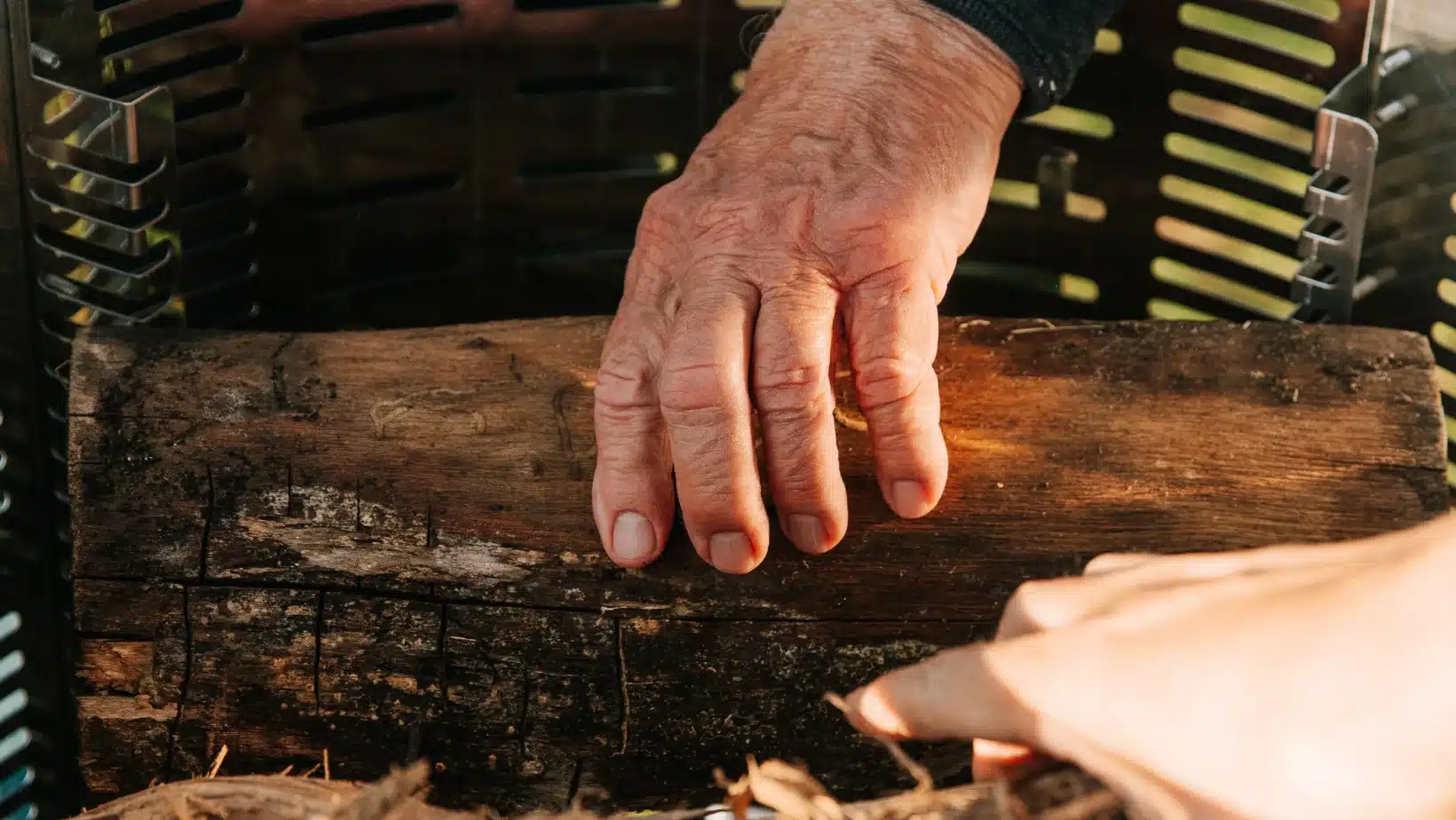
- Internal airflow flanges: These flanges guide oxygen throughout the unit, ensuring materials are surrounded by airflow during burning.
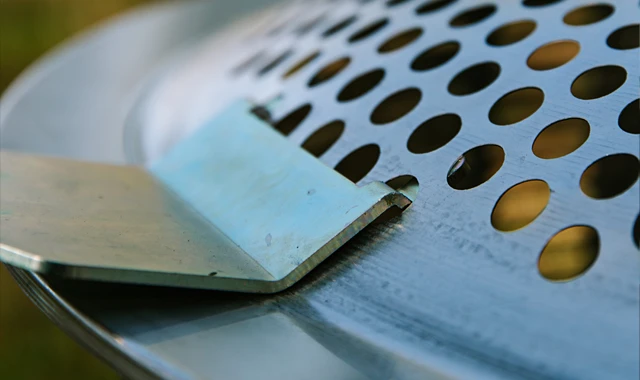
- Angle grates: The grates hold burning material off the ground, allowing air to circulate underneath the fire and helping maintain higher temperatures.
- Spark arrestor cover: Made from durable 304 stainless steel, the cover helps contain flying debris and keep sparks controlled during burning.
- Stable base ring and optional ash catcher: The base ring keeps the incinerator upright during use, while the optional ash catcher collects falling ash, simplifying cleanup.
Together, these design elements help create a backyard incinerator that burns hotter, lasts longer, and keeps the fire more contained than improvised burn barrels.
Burn Right Incinerators for Responsible Backyard Burning
Backyard incinerators can serve several practical purposes, from reducing yard debris and destroying sensitive documents to providing a contained outdoor fire on cooler evenings.
When used responsibly and with the right materials, they offer a controlled way to manage certain types of burnable debris.
Check out Burn Right incinerators today to find a durable, purpose-built option for responsible backyard burning.