
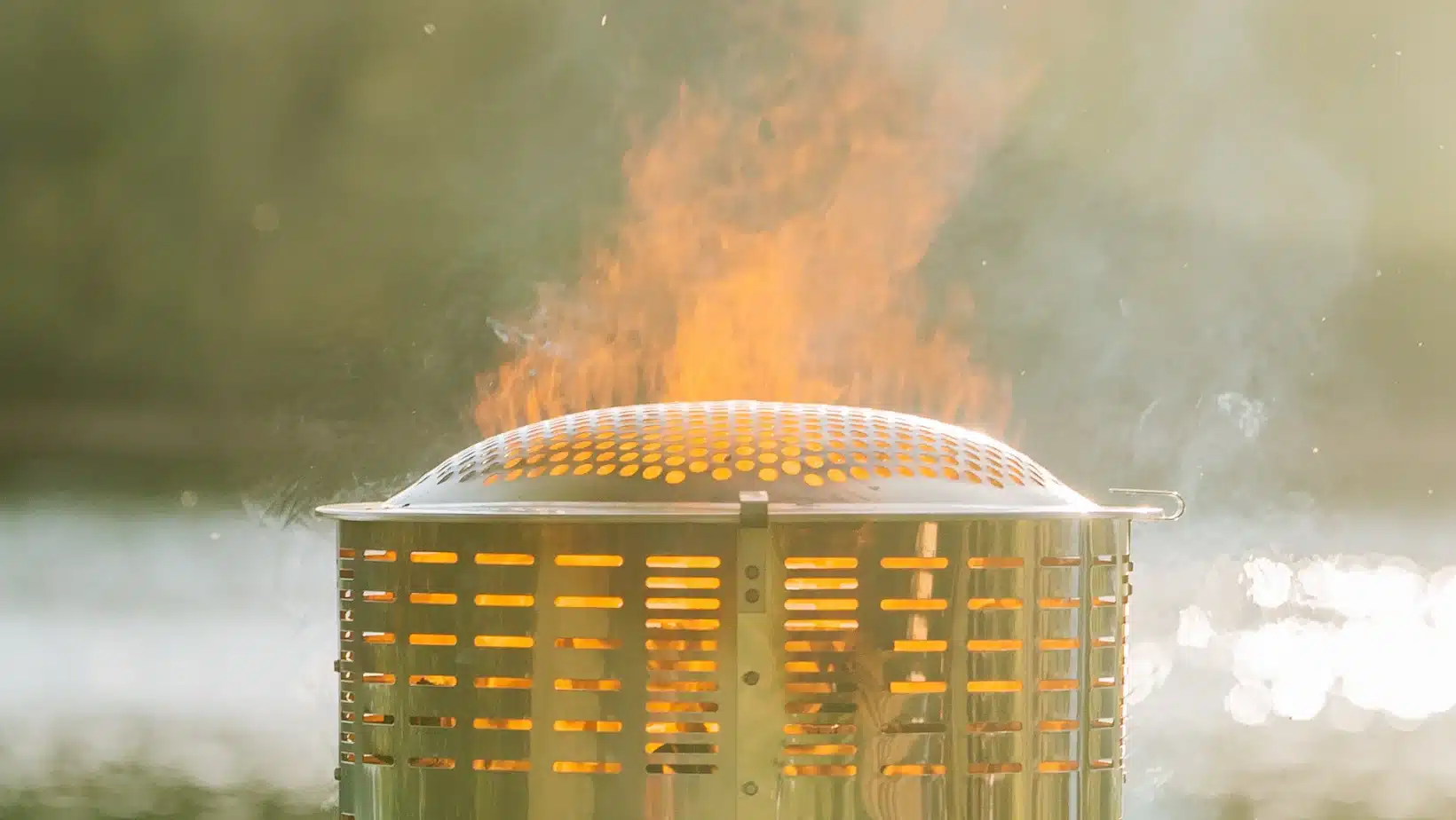
A neighbor recently tried to burn a pile of yard debris after some tree work. What should have been a quick cleanup turned into a cloud of thick smoke drifting straight into the house next door.
No one meant any harm. It’s just how most backyard burns go.
The problem is that traditional burn piles and barrels create far more smoke than people expect.
The good news? With the right approach, you can burn yard debris hotter and cleaner, without sending a wall of smoke across the fence.
Why Low‑Smoke Burning Matters
Wood smoke feels familiar: campfires, bonfires, that “cozy” smell on a cool night. The problem is that the same smoke carries tiny particles (PM2.5) that can reach deep into the lungs as well as the bloodstream. This has been scientifically known to trigger asthma, bronchitis, and heart and lung issues.
Those particles do not stay politely within your yard. They drift and linger around nearby homes, especially on cold, still days. Kids, older adults, pregnant women, and anyone with a compromised immune system or conditions such as asthma or heart or lung disease feel it first.
You do not have to give up burning to make a difference. On a smaller property, every low‑smoke burn helps your family and your neighbors breathe a little easier every time you light a fire.
Burning Smarter For People Around You
When you burn on a smaller property, the smoke doesn’t just stay in one place; it drifts. Sometimes toward the neighbor’s deck, sometimes toward an open window, sometimes right back toward your own yard.
That’s why burning a little smarter can make a big difference.
Heavy smoke from yard debris can occasionally bother people nearby, especially if they’re sensitive to it. It can also find its way into homes through open windows or vents.
The good news is that most of this is easy to avoid. With a hotter, cleaner burn and a little planning, you can clear yard debris while keeping the air around you much more comfortable.
3 Simple Tips To Burn With Less Smoke
Most of the time, heavy smoke comes from three simple issues: damp, messy fuel; a fire that cannot get enough air; or tossing in things that should never be burned in the first place.
When you fix those three, your fires burn hotter, cleaner, and clear out faster.
1. Choose When to Burn
A cleaner burn starts before you ever strike a match. Timing plays a big role in how much smoke you create and how far it travels.
Avoid burning right after rain or when materials are still damp. Moisture forces the fire to spend energy boiling water rather than producing steady heat, leading to smoldering and thick smoke.
Pay attention to weather conditions as well. Calm, windless days might seem ideal, but they often cause smoke to linger close to the ground and drift sideways into nearby homes. Light, steady airflow helps smoke rise and disperse rather than settle, which is why backyard fire safety tips often stress avoiding days with stagnant air.
Before you burn, do a quick check:
- Materials should be dry to the touch, not green or freshly cut
- Avoid days with heavy fog or stagnant air
- Make sure local rules allow burning that day by checking burn bans or open burning advisories
Choosing the right time sets you up for a hotter fire and fewer complaints later.
2. Choose What to Burn
Once timing is right, fuel choice matters just as much. Not everything that burns belongs in a backyard fire.
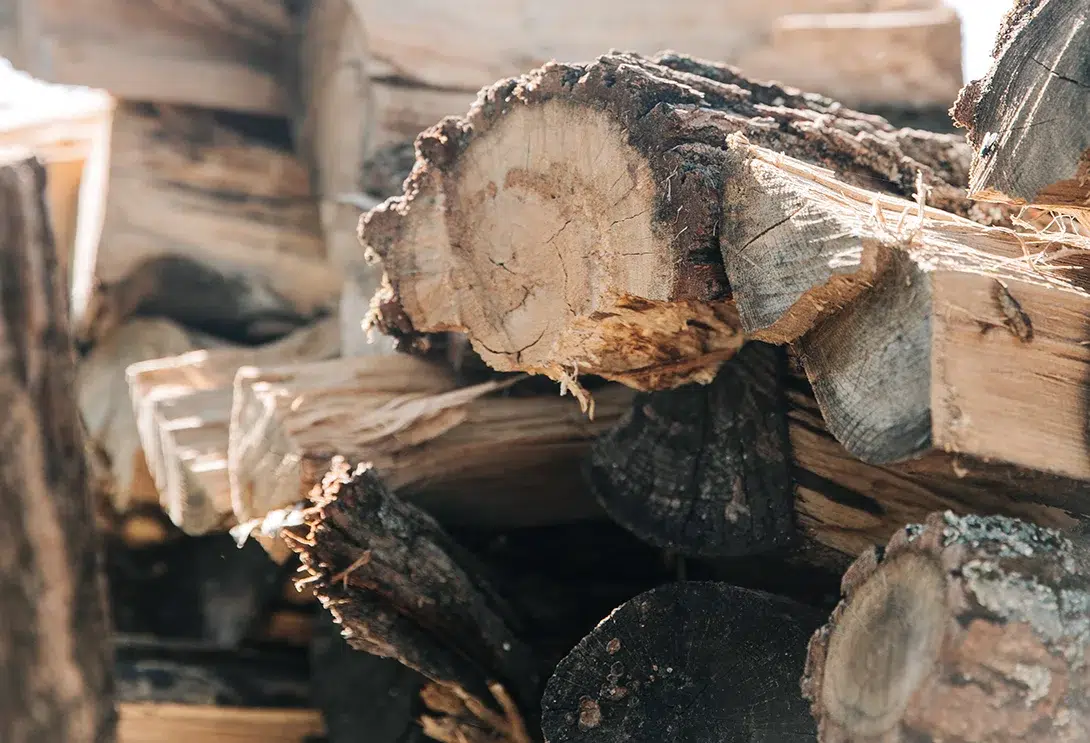
Dry, seasoned wood burns cleaner and hotter than green or freshly cut material. Wood generally needs to dry for months, and sometimes up to a year for hardwoods, before it burns well.
Targeting an ideal moisture range of about 15–20% helps reduce smoke and creosote buildup. Yard debris, like leaves and small branches, should be fully dried out and no longer green.
“Clean” matters too. Some materials may ignite easily, but they release harmful smoke when burned.
When you burn, stick to:
- Seasoned, untreated wood
- Dry leaves and small branches
- Paper or cardboard
Keep these out of the fire entirely:
- Household trash
- Plastics
- Painted, stained, or pressure‑treated wood
- Plywood, particleboard, or other glued wood products
Burning cleaner materials protects air quality and keeps smoke from becoming harsh or irritating. Trash and plastic‑containing items, on the other hand, can generate toxic byproducts and persistent pollutants that linger in local air and soil.
3. Be Considerate of Airflow and Burn Temperature While You Burn
How you manage the fire once it is lit makes a big difference in its behavior.
Fires that cannot get enough oxygen smolder at lower temperatures, creating more visible smoke and more fine particle pollution than hotter, well‑aerated burns.
Good airflow allows the fire to burn hot and steadily rather than smolder. Overpacking debris restricts oxygen and creates smoke that rolls rather than rises.
Older burn barrels or poorly vented fire pits often struggle here, trapping smoke and limiting combustion, while better‑ventilated setups support more complete burning and fewer fine particles.
To keep the fire burning clean:
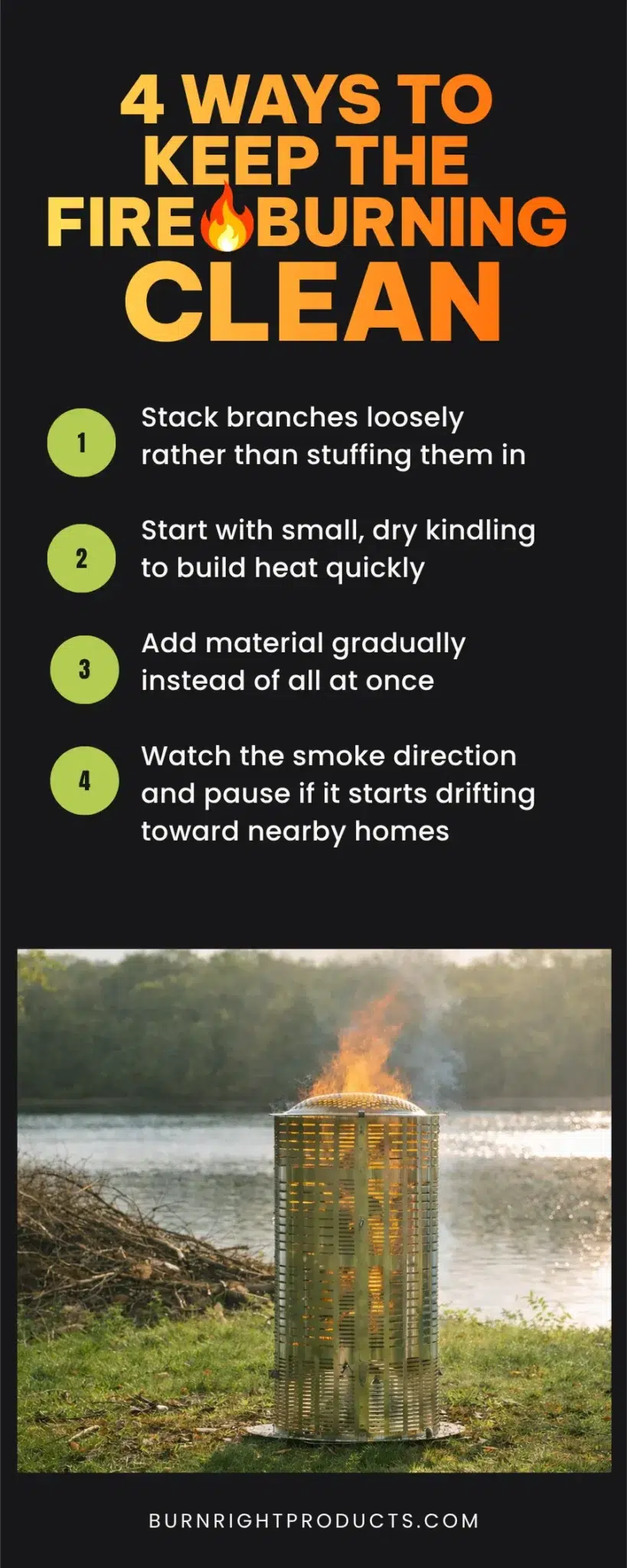
- Stack branches loosely rather than stuffing them in
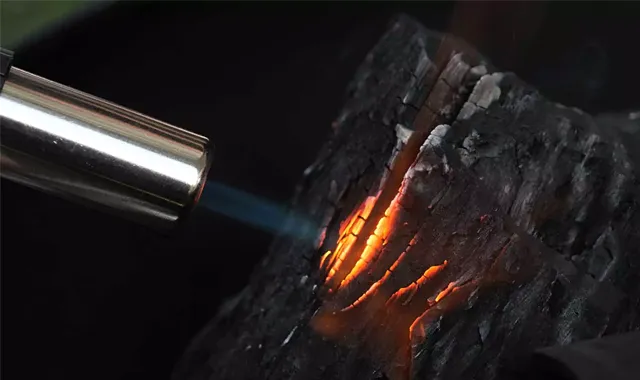
- Start with small, dry kindling to build heat quickly
- Add material gradually instead of all at once
- Watch the smoke direction and pause if it starts drifting toward nearby homes
Hotter fires burn more completely, producing fewer fine particles and less visible smoke. A little attention during the burn goes a long way toward keeping the air clearer for everyone nearby.
How Our High‑Temp Incinerator Reduces Smoke
Even with good habits, there are limits to how clean an open pile or old steel drum can burn. Traditional burn barrels often have solid sides, few air inlets, and thin metal that warps over time, which worsens airflow and encourages low‑temperature, smoky burns.
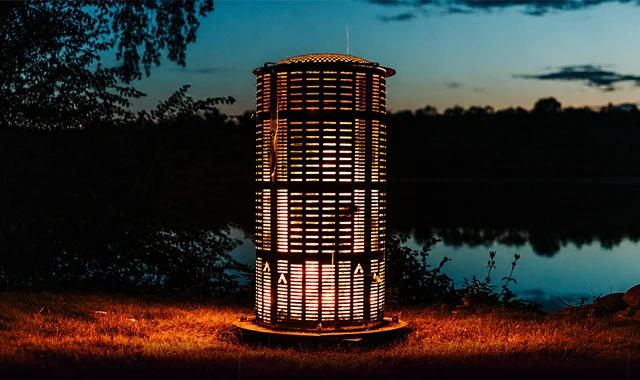
Our high‑temp stainless steel burn barrels are designed to solve these problems by more intentionally controlling air and heat.
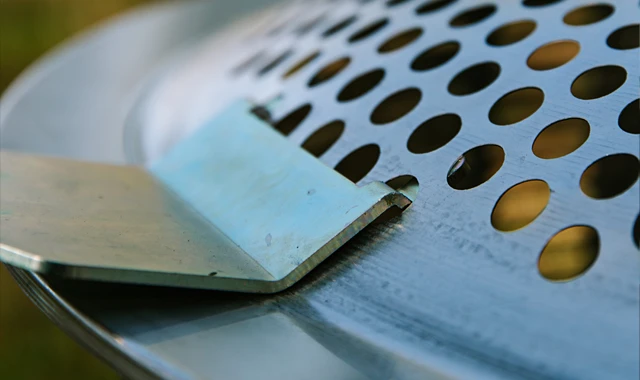
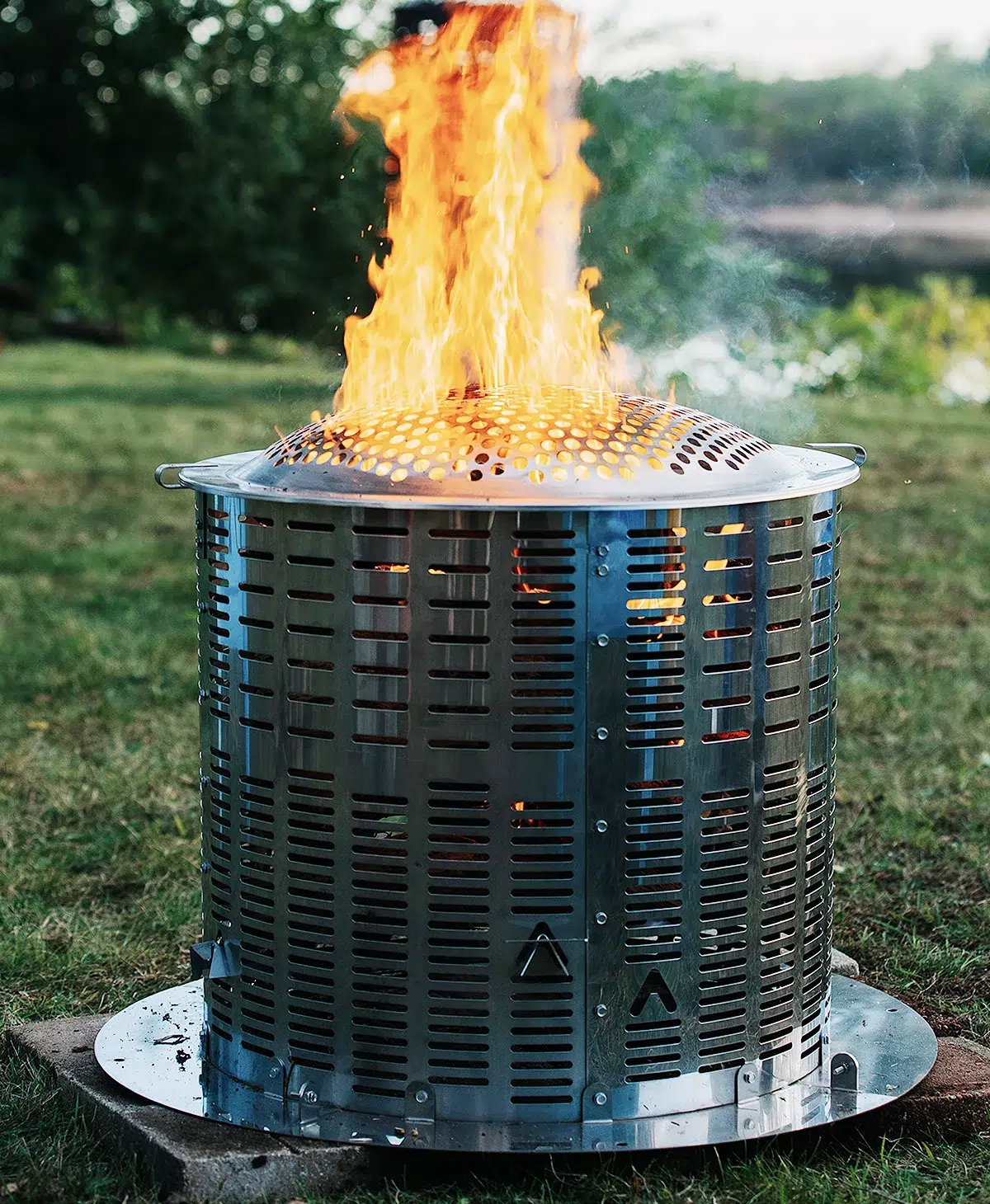
A raised base and an engineered venting system draw air in from below and around the sides, channeling it up through the load.
Our patented design allows the material to burn more completely, rather than smoldering in pockets. The stainless steel construction maintains its shape at higher temperatures, ensuring consistent airflow over time.
Burn Right Products: Your Next Step Toward Cleaner Backyard Burning
Burning with less smoke comes down to three basics:
- Choosing when to burn
- What to burn, and
- Managing airflow while you burn.
Burn Right stainless steel burn barrels are built to support these habits.
The elevated base and vented design enhance the burning efficiency of yard debris, wood, and paper-based materials, resulting in hotter, more complete combustion than with makeshift barrels or open piles. This improvement reduces visible smoke and leftover debris.
If you need a dedicated setup for yard waste and sensitive documents, a Burn Right® high‑temp incinerator offers a straightforward way to burn more efficiently and reduce smoke in and around your yard.
Contact us today to learn more about how Burn Right products can help you burn better.
Frequesntly Asked Questions
What Is The Best Way To Burn Yard Waste With Less Smoke?
“Use dry, seasoned yard waste, maintain good airflow, follow local backyard fire rules, and choose a low-smoke burn barrel design.”
Is It Better To Burn Wood When It’s Wet Or Dry?
“Guidance in Burn Wise: Facts & Figures is clear: always burn dry, seasoned firewood to reduce smoke and pollution.”
Can Burning Trash In A Barrel Harm The Environment?
“Yes! Environmental Effects of Backyard Burning show that burning trash can release dioxins and other toxic pollutants into air, soil, and water.”
Are Smokeless Burn Barrels Really Smokeless?
“No fire is completely smoke-free, but well-ventilated high-temp burn barrels can significantly reduce visible smoke compared to traditional barrels.”